Different types of scars
While most scars fade and improve with time, some can be problematic and visible for decades.
What type of scar do you have?
Mature
This type of scar is light-coloured and flat.

Immature
These scars appear red, are sometimes itchy and painful, and slightly elevated. Many will mature to become flat and assume pigmentation similar to the surrounding skin. They can be more pale or slightly darker.

Contractures
Scars that cross joints or skin creases at right angles are prone to develop shortening or contractures. They occur when the scar is not fully mature and tend to be hypertrophic. They typically have disabling and dysfunctional properties. They result mostly from burn injuries.

Widespread stretched
These scars appear when the fine lines of surgical scars gradually become stretched and widened. Typically flat, pale, soft, symptomless scars are often seen after knee or shoulder surgery. Stretch marks after pregnancy are variants of widespread scars. No elevation, thickening or nodularity which is present distinguishes them from hypertrophic scars.

Linear hypertrophic
These scars are red, raised and sometimes itchy. Confined to the border of the original surgery or trauma. These scars develop within weeks after surgery and may increase rapidly in size for three to six months and then, after a static phase, begin to regress. They mature to have an elevated, slightly rope-like appearance with increased width. Full maturation can take up to two years.

Widespread hypertrophic
Common after a burn. A widespread red, raised and sometimes itchy scar that remains within the borders of the original burn.

Minor keloid
A focally raised, itchy scar that extends over normal tissue. May develop up to several years after injury and does not regress without treatment. Surgical excision is often followed by recurrence.
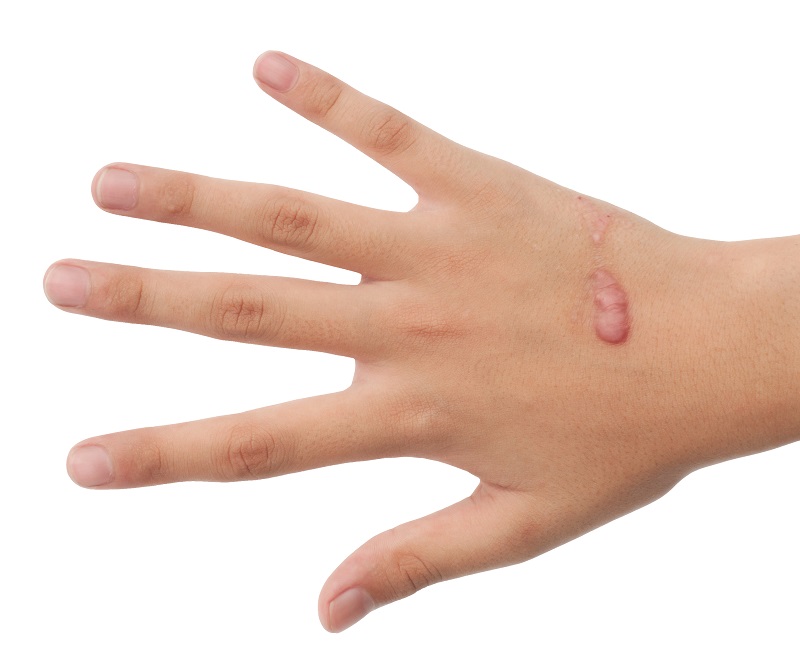
Major keloid
A large, raised scar which may be painful or pruritic. Extends over normal tissue and can continue to spread over many years.

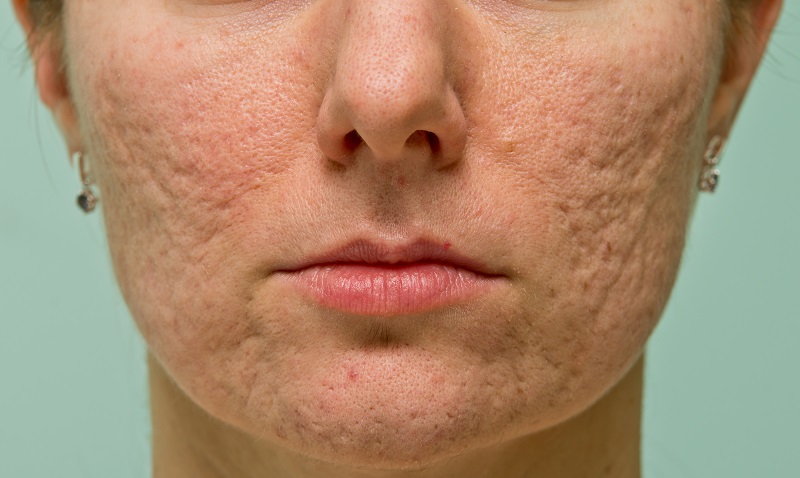
Atrophic
Atrophic scars occur as depressed and well-defined lesions. They are usually caused by collagen destruction during the course of an inflammatory condition such as cystic acne or varicella. These scars often have a sunken and pitted appearance.
High risk factors
Age
Children and young adults are prone to vigorous scarring. Elderly people, however, show slower wound closure and slower wound healing rates, therefore they have a reduced risk of abnormal scarring.

Skin type, genetic factors
People with skin types I/II (white, fair, freckles) and V/VI (dark brown, black) are more likely to develop abnormal scars. If you have experienced pathological scarring before or it lies within your family history you may have an increased likelihood of abnormal scar formation.

Location
Scars that cross joints, skin creases or large muscle groups are likely to form abnormal scars, for example, after caesarean sections or after chest and breast surgery.

Hormonal influences
Scars have a tendency to enlarge during pregnancy and puberty due to the hormonal influence.